HIV/AIDS
Overview
HIV (human immunodeficiency virus) is a virus that attacks the body’s immune system. Without treatment, it can lead to AIDS (acquired immunodeficiency syndrome).
There is currently no effective cure. Once people get HIV, they have it for life. But proper medical care can control the virus.
People with HIV who get on and stay on effective HIV treatment can live long, healthy lives and protect their partners.
What is HIV/AIDS ?
HIV stands for human immunodeficiency virus. It attacks and destroys important cells in the immune system, making it harder for the body to fight infections and diseases.
If HIV is not treated, it can progress to AIDS (acquired immunodeficiency syndrome), the most serious stage of HIV infection. At this point, the immune system is severely weakened, and opportunistic infections or certain cancers can develop.
Because HIV inserts its genetic material into a person’s DNA, it is called a retrovirus. Once someone has HIV, they have it for life—the body cannot naturally clear it.
How HIV spreads:
Through unprotected sex (anal or vaginal) with someone who has HIV
By sharing needles, syringes, or other injection equipment
From mother to child during pregnancy, childbirth, or breastfeeding if untreated
HIV is not spread by casual contact, hugging, or sharing food and drinks.
Treatment and prevention:
There is no cure for HIV, but antiretroviral therapy (ART) can control the virus.
ART lowers the amount of HIV in the blood (viral load). When the viral load is so low it can’t be detected, it’s called undetectable. People with HIV who maintain an undetectable viral load can live long, healthy lives and will not transmit HIV through sex (U=U: Undetectable = Untransmittable).
Medicines like PrEP (pre-exposure prophylaxis) and PEP (post-exposure prophylaxis) can help prevent HIV infection.
Types of HIV?
Are there different types of HIV?
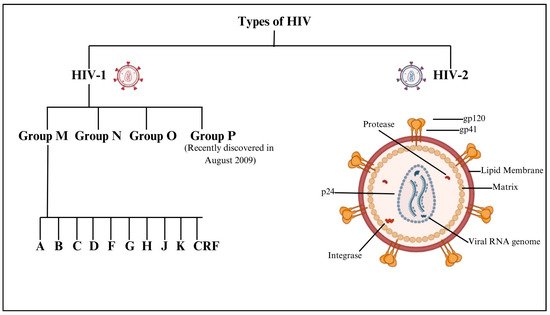
Yes. There are two main types:
- HIV-1: The most common type found worldwide. It spreads more easily and usually progresses to AIDS faster than HIV-2.
- HIV-2: Found mainly in West Africa. It spreads less easily and progresses more slowly.
How does HIV affect the body?
HIV attacks the immune system, especially CD4 T-cells, a type of white blood cell that helps fight infections and diseases.
Over time, HIV destroys these CD4 cells, which weakens the immune system. This makes the body more vulnerable to opportunistic infections (OIs)—illnesses that are usually rare or mild in healthy people but can become severe or life-threatening in someone with HIV.
HIV can also damage body tissues directly, leading to conditions such as:
- Neurologic problems
- Heart disease
- Other serious health issues
CD4 cell count (also called T-cell count) measures the number of CD4 cells in a drop of blood. Doctors use this test to track how HIV is affecting the immune system and to guide treatment decisions.
Symptoms of HIV/AIDS
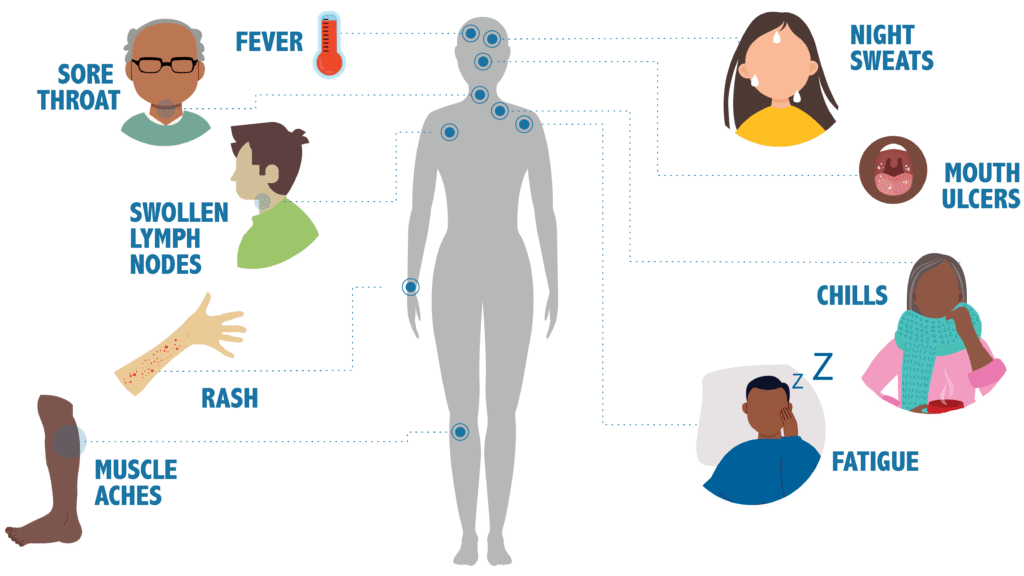
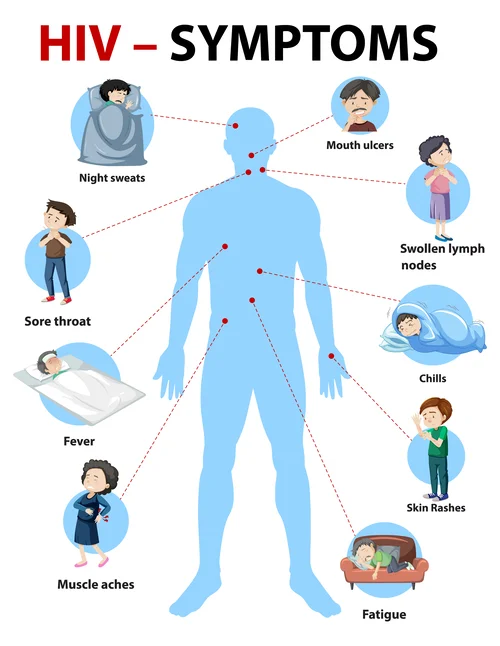
Most people have flu-like symptoms within 2 to 4 weeks after infection. Symptoms may last for a few days or several weeks.
Having these symptoms alone doesn’t mean you have HIV. Other illnesses can cause similar symptoms.
Some people have no symptoms at all. The only way to know if you have HIV is to get tested.
How it spreads
Most people who get HIV are infected through anal or vaginal sex, or by sharing needles, syringes, or other drug injection equipment.
HIV doesn’t spread through casual contact—it can only be passed on through certain body fluids:
Blood
Semen (cum)
Pre-seminal fluid (pre-cum)
Rectal fluids
Vaginal fluids
For HIV transmission to happen, these fluids need to come into direct contact with a mucous membrane (like the vagina, rectum, mouth, or penis), damaged tissue, or be injected directly into the bloodstream (such as with a needle).
A few things can increase the risk of transmission, like:
Having a high viral load
Having another sexually transmitted infection (STI)
Using alcohol or drugs, which may affect decision-making
The good news is there are effective ways to reduce or prevent HIV transmission. These include using condoms, taking PrEP (pre-exposure prophylaxis), using clean needles, and ensuring people with HIV get effective treatment to keep their viral load undetectable.
How Do I Know If I Have HIV?
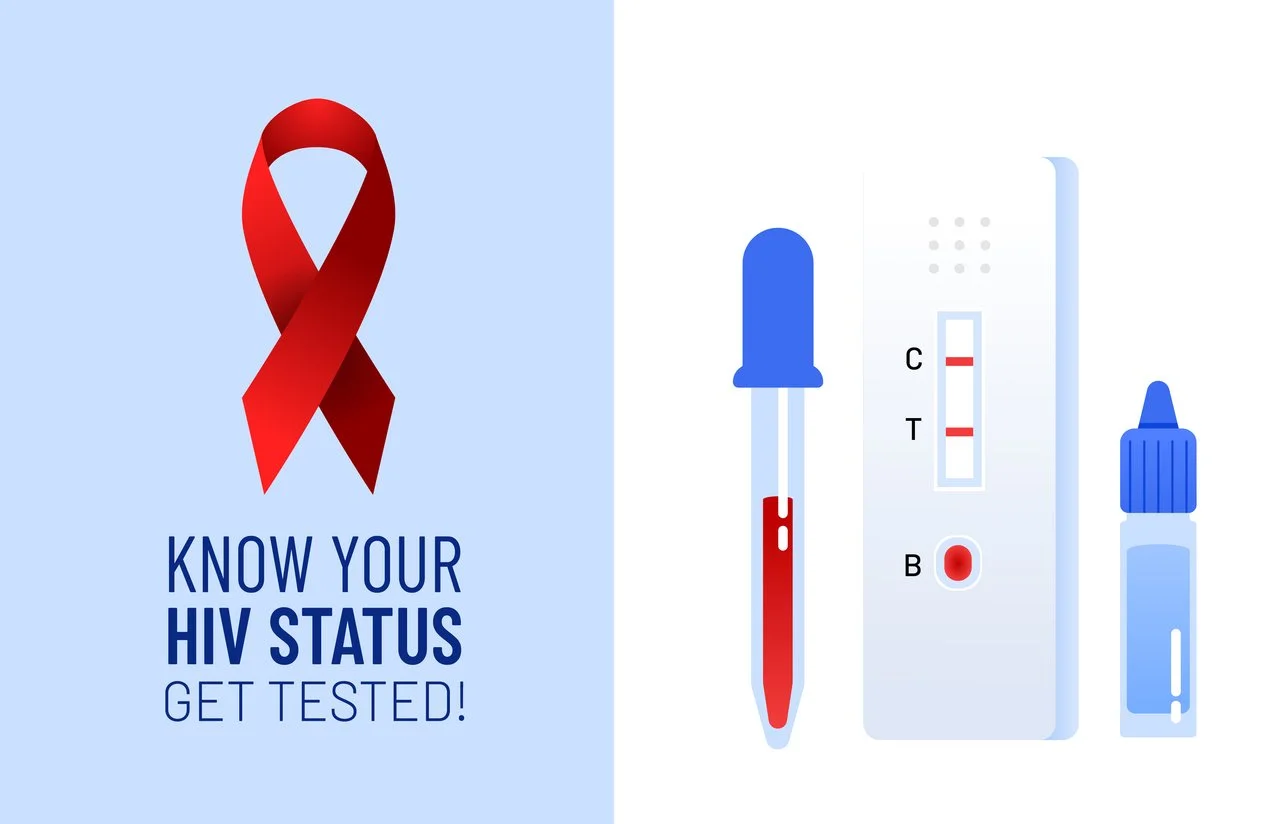
The only way to know for sure if you have HIV is to get tested. Testing is quick and simple.
You can:
Ask your healthcare provider for an HIV test.
Visit a medical clinic, community health center, substance abuse program, or hospital.
Use the HIV Services Locator to find testing near you.
If you test positive: You’ll be connected to HIV care so you can start treatment right away.
If you test negative: You’ll know your status and can take steps to stay HIV-free.
HIV self-testing is also an option.
You can test yourself at home or in a private setting.
Results are usually ready within 20 minutes.
Test kits can be purchased online or at pharmacies.
Some health departments and community organizations provide free or low-cost test kits (eligibility may apply).
To find out where you can get a self-test kit, call your local health department or use the HIV Testing and Care Services Locator.
What are the stages of HIV?
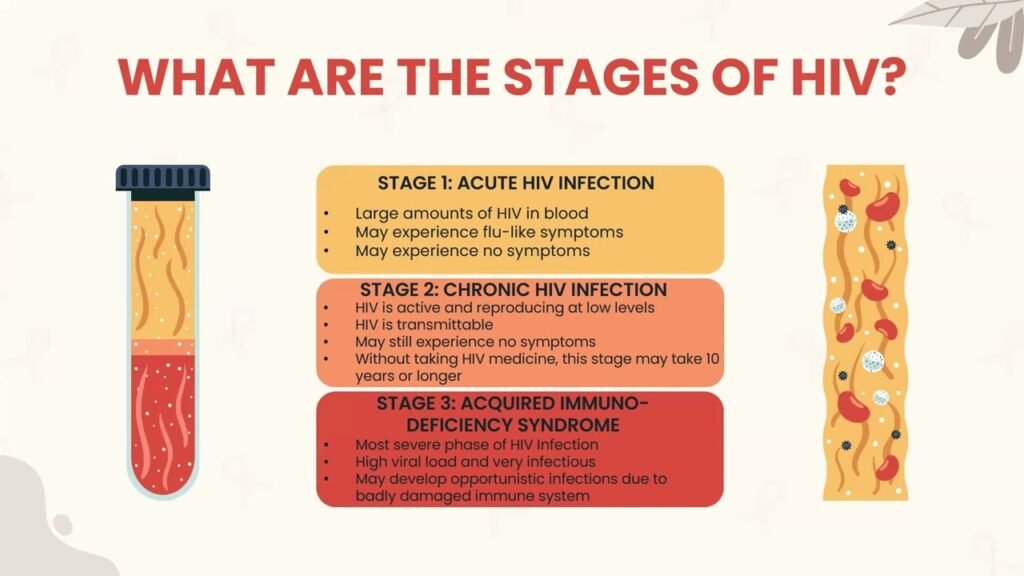
HIV progresses in three main stages:
Stage 1: Acute HIV
Some people develop flu-like symptoms a month or two after getting HIV. These may last for a week or more, then go away. Even if symptoms disappear, the virus is still active in the body.
Stage 2: Chronic HIV (Clinical Latency)
After the early stage, HIV can stay in the body for many years without causing obvious illness. During this time, a person may feel healthy but can still pass the virus to others.
Stage 3: AIDS
This is the most advanced stage of HIV. The immune system becomes very weak, making it hard to fight off infections and diseases. In this stage:
Opportunistic infections (illnesses that normally wouldn’t make a healthy person sick) can become severe.
The risk of certain cancers also increases. These conditions are called AIDS-defining illnesses.
A person is diagnosed with AIDS if they:
Have fewer than 200 CD4 cells per cubic millimeter of blood, or
Develop an AIDS-defining illness.
Diagnosis and Tests
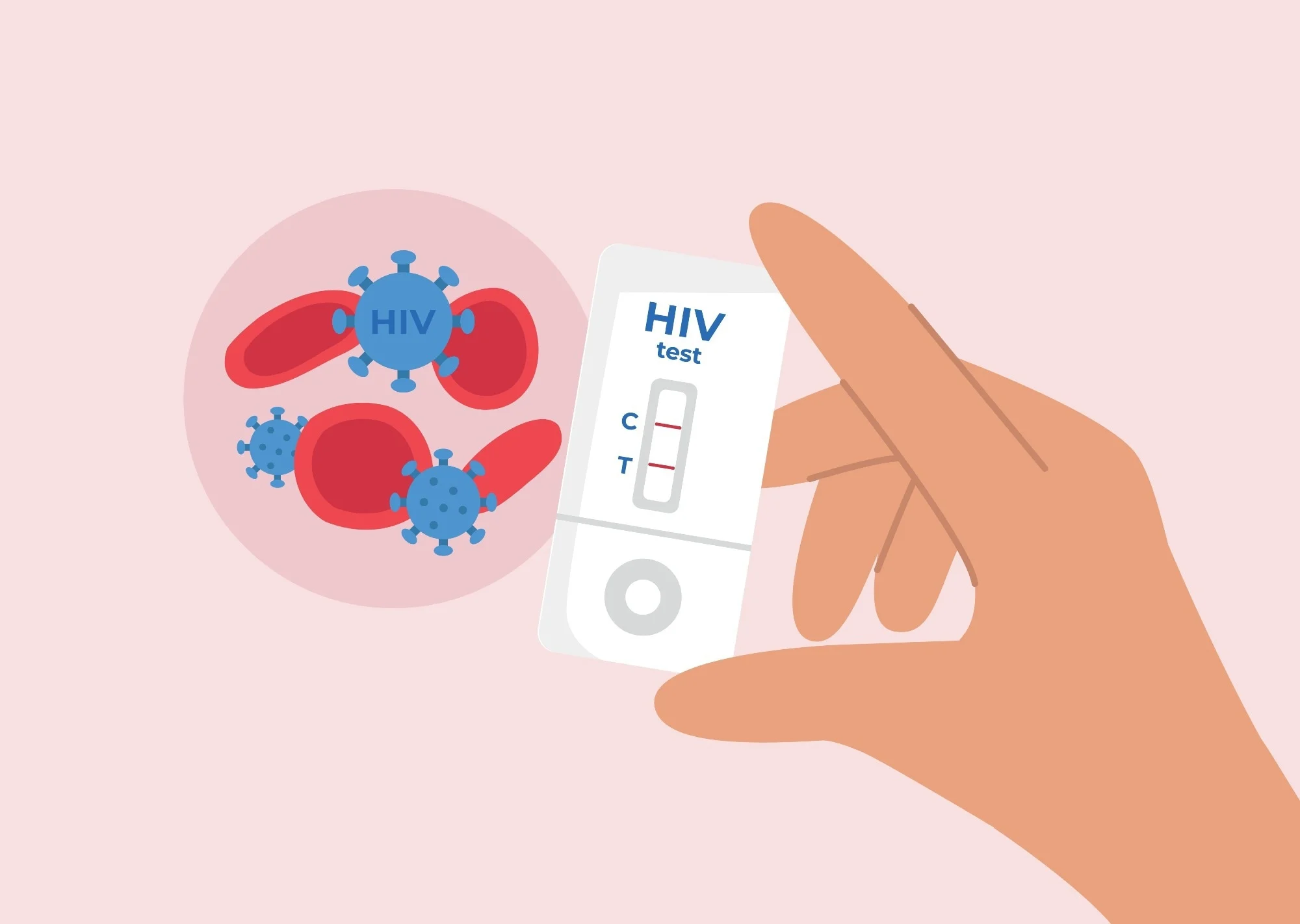
HIV can be diagnosed with a test that checks your blood or saliva (spit). Testing can be done:
At home with an HIV test kit
At a doctor’s office
At a community testing center
If your result is negative:
No further testing is needed if you haven’t had any possible exposure in the last three months.
If your test was done with a blood draw, make sure you’re outside the “window period” (the time it takes for HIV to show up on the test). Ask your healthcare provider if you’re not sure.
If you had a possible exposure within the last three months, it’s a good idea to get tested again later to confirm your result.
If your result is positive:
The lab will usually do follow-up tests to confirm the diagnosis.
Causes of HIV
HIV (human immunodeficiency virus) is a virus that weakens the immune system by attacking white blood cells called CD4 T cells. These cells help your body fight infections. When too many of them are destroyed, the body becomes less able to protect itself from diseases.
How does HIV become AIDS?
A person can live with HIV for years without noticeable symptoms. HIV develops into AIDS (acquired immunodeficiency syndrome) when the CD4 T cell count drops below 200, or when serious infections or certain cancers occur that usually affect only people with very weak immune systems.
How HIV spreads
HIV can enter the body through blood, semen, vaginal fluids, or breast milk. The main ways include:
Sexual contact: Having vaginal or anal sex with an infected partner. Oral sex carries less risk but can still transmit HIV if there are sores or cuts in the mouth.
Sharing needles: Using contaminated needles or syringes when injecting drugs greatly increases risk.
Blood transfusion: In places where donated blood isn’t screened properly, HIV can be spread through transfusions. In countries with strict screening, this risk is very low.
Pregnancy, childbirth, or breastfeeding: A mother with HIV can pass the virus to her baby. Treatment during pregnancy can reduce this risk significantly.
How HIV doesn’t spread
HIV is not spread through everyday contact. You cannot get it by:
Hugging, kissing, shaking hands, or dancing with someone who has HIV
Sharing food, drinks, or toilets
Air, water, or insect bites
Donating blood
In short, HIV spreads only through specific body fluids, not through casual contact.
Risk factors
Who can get HIV/AIDS?
HIV does not discriminate. Anyone — regardless of age, race, sex, or sexual orientation — can become infected.
Factors that increase your risk include:
Having unprotected sex: Using a new latex or polyurethane condom every time lowers risk. Anal sex is riskier than vaginal sex, and having multiple sexual partners increases the chances of infection.
Having a sexually transmitted infection (STI): STIs can cause open sores on the genitals, making it easier for HIV to enter the body.
Injecting drugs with shared needles: Sharing needles or syringes exposes you directly to infected blood.
Protecting yourself means practicing safer sex, getting tested for STIs, and never sharing injection equipment.
Complications of HIV
How HIV affects the immune system
HIV weakens the immune system, making the body more vulnerable to infections and certain cancers. These are called opportunistic infections because they take advantage of a weakened immune system.
Common infections linked to HIV/AIDS
Pneumocystis pneumonia (PCP): A serious fungal infection that can cause severe pneumonia. Thanks to modern HIV treatments, it’s less common in the U.S., but it remains a leading cause of pneumonia in people with HIV.
Candidiasis (Thrush): A fungal infection that creates a thick, white coating in the mouth, throat, esophagus, or vagina.
Tuberculosis (TB): One of the most common opportunistic infections worldwide and a leading cause of death in people with AIDS. It’s less frequent in the U.S. due to widespread HIV treatment.
Cytomegalovirus (CMV): A herpes virus spread through body fluids such as blood, saliva, semen, and breast milk. It usually stays dormant in healthy people but can reactivate in those with HIV, damaging the eyes, digestive system, lungs, or other organs.
Cryptococcal meningitis: A fungal infection that causes inflammation of the brain and spinal cord membranes. It often starts from fungus found in soil and can be life-threatening in people with weakened immunity.
Toxoplasmosis: Caused by a parasite carried by cats and spread through their stool. It can damage the heart, cause seizures when it reaches the brain, and may be fatal if untreated.
Managing HIV with medicines greatly reduces the risk of these infections.
Cancers common to HIV/AIDS
Cancers linked to HIV/AIDS
Because HIV weakens the immune system, it increases the risk of certain cancers. These are sometimes called AIDS-related cancers.
Lymphoma: A cancer that starts in white blood cells. The earliest sign is often painless swelling of the lymph nodes, usually in the neck, armpits, or groin.
Kaposi sarcoma: A tumor of the blood vessel walls. It appears as pink, red, or purple lesions on the skin or inside the mouth in people with lighter skin. In people with darker skin, the lesions may look dark brown or black. Kaposi sarcoma can also affect internal organs, such as the lungs or digestive system.
HPV-related cancers: Human papillomavirus (HPV) can lead to cancers of the anus, cervix, and mouth or throat. These cancers are more common in people with HIV because of weakened immune defenses.
Early detection and treatment of HIV greatly reduce the risk of these cancers.
Progression to AIDS
Modern antiviral treatments have greatly reduced AIDS-related deaths around the world. In the U.S., most people with HIV who get treatment never develop AIDS. Without treatment, HIV usually progresses to AIDS in about 8–10 years.
What AIDS means:
AIDS develops when HIV has severely weakened the immune system. At this stage, the body is much more vulnerable to diseases it normally could fight off. These are called opportunistic infections or opportunistic cancers. Sometimes, people may even get these infections during the early stages of HIV.
Possible symptoms of opportunistic infections include:
Night sweats
Chills
Recurrent fever
Ongoing diarrhea
Swollen lymph nodes
White spots or sores in the mouth
Extreme tiredness
Weakness
Rapid, unexplained weight loss
Skin rashes or bumps