
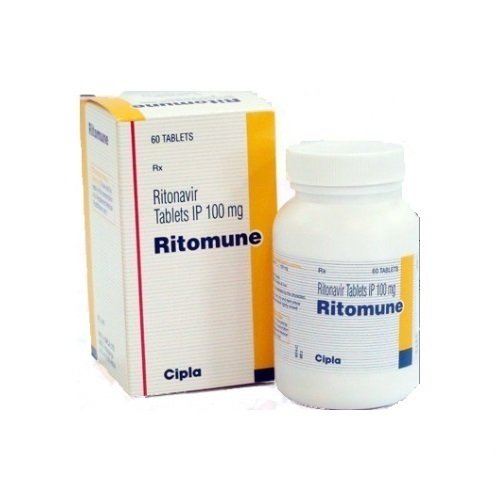
Ritomune 100mg
Brand Name :
Salt Composition : Ritonavir
Category : HIV
Manufacturer : Cipla Ltd
Prescription Required : Yes
Strength : 100mg
Package : 60 Tablets
Product Form : Tablets
Storage : Store below 30°C
Ritomune 100mg Tablet (Ritonavir 100mg)
Description
Ritomune 100mg contains Ritonavir, a peptidomimetic HIV protease inhibitor active against both HIV-1 and HIV-2.
-
Ritonavir exhibits antiretroviral activity by inhibiting HIV protease enzymes, preventing the maturation of infectious viral particles.
-
It is frequently used in combination with other antiretroviral drugs to enhance therapy and reduce viral resistance.
-
Ritonavir is also a CYP3A inhibitor, boosting plasma concentrations of co-administered protease inhibitors.
Medical Uses / Indications
-
Treatment of HIV-1 infection in adults and children, in combination with other antiretroviral medications.
Mechanism of Action
-
Ritonavir inhibits HIV protease, an enzyme responsible for processing viral polyproteins (Gag and Pol), which are critical for producing mature viral particles.
-
Gag proteins: structural components of the virus (core and nucleocapsid).
-
Pol proteins: include reverse transcriptase, integrase, and protease enzymes.
-
Inhibition leads to immature, non-infectious viral particles, stopping viral replication.
Side Effects
Common:
-
Edema, gout, dyslipidemia (increased cholesterol and triglycerides)
-
Abdominal pain, nausea, vomiting, dyspepsia, flatulence
-
Fat redistribution (lipodystrophy), rash, pruritus, acne
Serious / Rare:
-
Liver toxicity, hepatitis, pancreatitis
-
Allergic/hypersensitivity reactions, Stevens–Johnson syndrome, epidermal necrolysis
-
Cardiovascular problems, hypertension
-
Arthralgia, myopathy, myalgia
-
GI hemorrhage, gastroesophageal reflux disease
-
Cushing’s syndrome
Precautions
-
Drug interactions: Serious interactions with CYP3A inducers/inhibitors.
-
Hepatic toxicity and pancreatitis: Monitor liver function.
-
Metabolic effects: Diabetes mellitus, lipid disorders.
-
Immune reconstitution syndrome and fat redistribution may occur.
-
Hemophilia: May increase bleeding risk.
-
Patients should receive supportive care, counseling, and regular monitoring.
Drug Interactions
-
Increases plasma levels of co-administered CYP3A-metabolized drugs.
-
Boosts HIV protease inhibitors but may decrease integrase inhibitors’ effect.
-
Interacts with analgesics, anti-cancer drugs, anti-arrhythmics, warfarin, anticonvulsants, and antidepressants, altering their plasma levels.
Overdose
-
No specific antidote; provide supportive care and monitor symptoms.
-
Hemodialysis is not effective due to high plasma protein binding.
Pregnancy & Lactation
-
Pregnancy Category C: Use only if benefits outweigh risks.
-
Breastfeeding: Not recommended; may transmit HIV to the baby.
Dosage
Adults:
-
Typical dose: 600mg orally twice daily.
-
Initiate at 300mg twice daily, increase by 100mg every 2–3 days until reaching 600mg.
Pediatrics:
-
For children >1 month: 350–400 mg/m² twice daily, max 600 mg.
-
Initial dose: 250 mg/m² twice daily, increase by 50 mg/m² every 2–3 days.
-
Adjust dose when combined with atazanavir, darunavir, fosamprenavir, saquinavir, or tipranavir.
Administration: Oral, with or without food, as prescribed.
Storage
-
Store below 30°C, in a dry place, protected from heat, moisture, and light.
Missed Dose
-
Contact your physician for guidance.
-
Take missed dose as soon as possible unless it is near the next scheduled dose; do not double doses.
Reviews
There are no reviews yet.